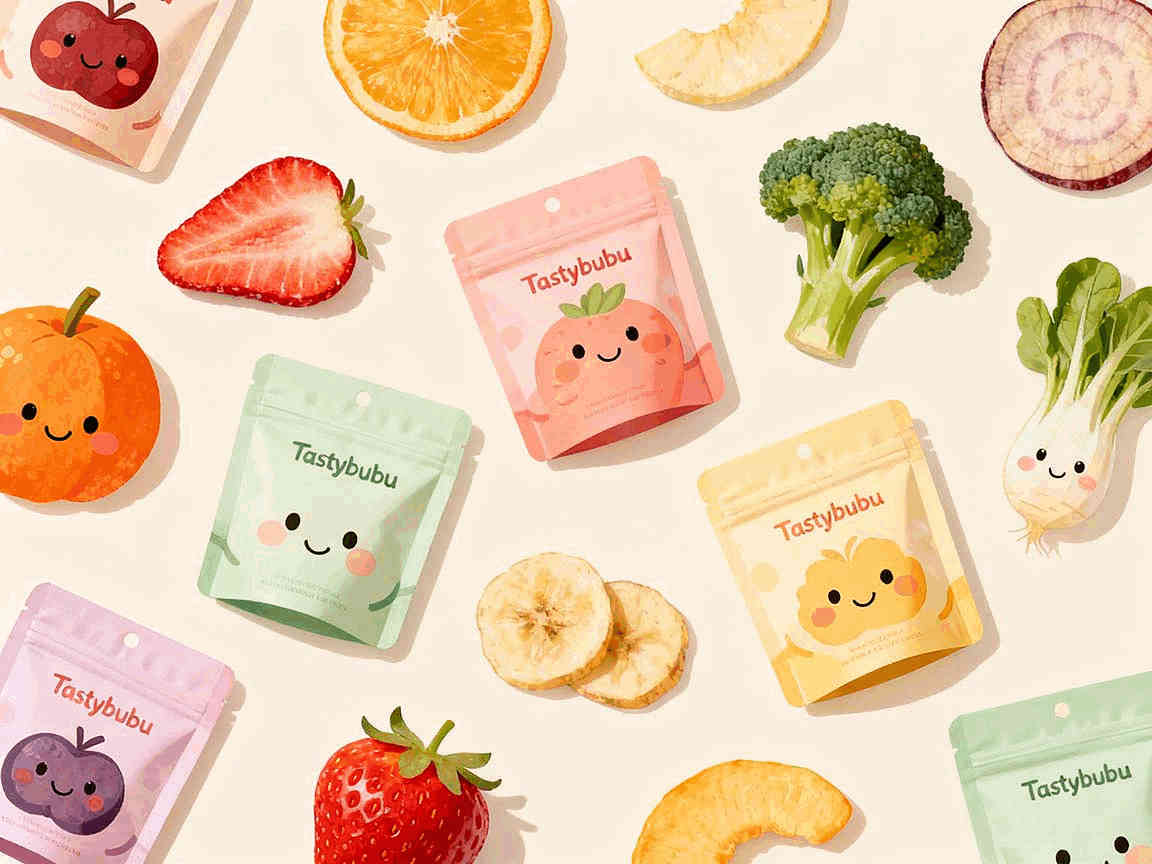

Food security is being transformed by freeze-drying, which is increasingly used as a climate-resilience tool to turn surplus or at-risk produce into long-lasting, nutrient-dense food. There is growing evidence that it can support local food security in the face of extreme weather and supply chain shocks. The core narrative you outlined—preserving seasonal, local crops for year-round community use, outside of cold-chain dependence—is broadly consistent with current science and emerging practice.
Freeze-drying, waste reduction and resilience
A U.S. Fish & Wildlife Service project in New Mexico describes how Backyard Farms buys imperfect crops from local farmers, freeze-dries them to reduce weather-related losses, and extends access to nutritious foods for rural communities, explicitly framing this as climate-change resilience.
A community food bank project in Port Townsend, Washington, uses a shared freeze dryer to turn surplus local produce into a long-term “food reserve” for winter and emergencies, reducing waste during harvest gluts and providing shelf-stable fruit and vegetables for up to decades.
An analysis on freeze-drying and food insecurity argues that freeze-dried food’s long shelf life, lack of cold-chain requirements, and lower spoilage make it a promising tool for building resilient, sustainable food systems, especially in remote or underserved regions.
Nutrient retention and “pantry” quality
A review on freeze-drying of plant foods concludes that vacuum freeze-drying is among the best water-removal methods for preserving bioactive compounds in fruits and vegetables, with superior retention of phenolics, anthocyanins, and antioxidant activity compared with hot-air drying.
Research summarized by FoodNavigator reports that freeze-dried fruit retained nearly all vitamin C and anthocyanins compared with fresh controls, and that freeze-drying extended shelf life without preservatives while reducing waste and easing transport.
A technical overview on upcycling surplus vegetables notes that freeze-drying can extend shelf life for years while preserving up to roughly 98% of vitamins and minerals, supporting the idea of a “nutrient-dense” climate-proof pantry.

Local food systems and supply chain shocks
A recent study on extreme weather and the U.S. agrifood supply chain finds that droughts significantly reduce interstate agricultural exports and downstream food manufacturing, highlighting how climate-driven disruptions propagate through food systems and why resilient storage and decentralised sourcing matter.
An industry case study on “feeding the future” explains that freeze-dried products bypass cold-chain logistics, reduce energy use and emissions, and make it easier to get food to regions with limited infrastructure, positioning freeze-drying as a response to supply chain challenges.
A policy paper on preserving surplus produce in California argues that lightweight, shelf-stable freeze-dried foods can cut transportation costs and help food banks distribute more nutritious food over longer distances and time spans.
Food banks, community projects and surplus produce
The Port Townsend Community Freeze Dryer Project documents that hundreds of pounds of locally grown surplus produce are freeze-dried each harvest season, creating an emergency and winter reserve for nearby food banks and reducing spoilage that would otherwise occur.
An article on food-tech partnerships with food banks describes how local organizations are testing low-temperature drying, including freeze-drying, to process everything from berries to root vegetables so schools and shelters can serve nutritious, shelf-stable foods beyond the harvest window.
Commentary on freeze-drying as a sustainable solution notes that the technology enables aid organizations to stockpile nutritious food for crises and creates markets for surplus crops that might otherwise be discarded, aligning closely with a food-bank–centred “climate-proof pantry” model.
Shelf life, decentralisation and “prepper vs. community” framing
A technical review of plant-based freeze-drying notes that while the process is energy intensive and often used for high-value products, it offers maximal quality retention and long shelf life compared with other drying methods, supporting its role as a premium but powerful resilience tool.
Industry analyses highlight that freeze-dried foods can be stored for decades without refrigeration, dramatically reducing reliance on central cold chains and enabling more decentralised, community-level food storage systems.
A discussion of freeze-drying for sustainable food systems emphasizes that dried foods have historically buffered societies against seasonal scarcity and that modern drying technologies, including freeze-drying, can contribute to the UN 2030 food security and sustainability goals.
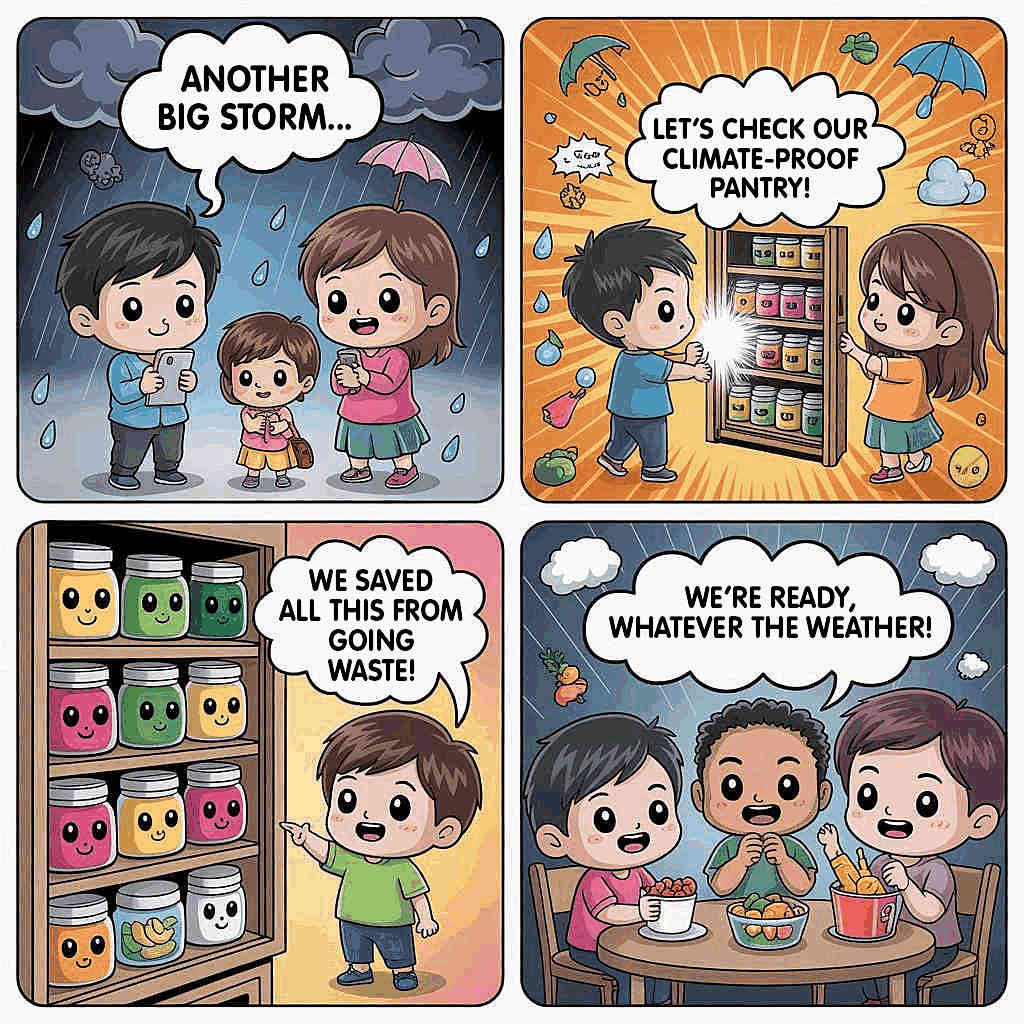
sources
- U.S. Fish & Wildlife Service – “Freeze Drying Crops for Climate Change Resilience” (project page) https://www.fws.gov/project/freeze-drying-crops-climate-change-resilience
- U.S. Fish & Wildlife Service – “Freeze-drying crops for increased climate change resilience in New Mexico” (PDF briefing) https://www.fws.gov/sites/default/files/documents/2024-10/freeze-drying-crops-for-increased-climate-change-resilience-in-new-mexico.pdf
- Food Bank Growers / Jefferson County Food Bank Association – “Community Freeze Dryer Project in Port Townsend” https://www.foodbankgrowers.org/community-freeze-dryer-project
- Port Townsend Food Co-op – “Foodbank Growers” https://www.foodcoop.coop/blog/2023/1/23/foodbank-growers
- Food Bank Growers – “2022 Annual Report” https://www.foodbankgrowers.org/2023-annual-report
- Food and Drink Technology – “Study highlights freeze drying benefits” (reporting on Sheffield Hallam University research) https://www.foodanddrinktechnology.com/news/5783/study-highlights-freeze-drying-benefits/
- International Journal of Food Science & Technology – “Influence of freezing, lyophilisation and air-drying on the total anthocyanin content, vitamin C and antioxidant capacity of selected berries” https://academic.oup.com/ijfst/article/52/5/1246/7775742
- MDPI (open-access, peer-reviewed) – “Freeze-Drying of Plant-Based Foods” https://pmc.ncbi.nlm.nih.gov/articles/PMC7022747/
- Scientific/industry news via FoodManufacture – “Freeze-dried strawberries keep nutrients, says study” https://www.foodmanufacture.co.uk/Article/2013/12/13/Nutrition-of-fruit-unaffected-by-freezing/
- Flex Foods (manufacturer, but summarizing technical benefits) – “Turning Surplus Vegetables into Value-Added Freeze-Dried Products” https://www.flexfoodsltd.com/blog/upcycling-food-waste-turning-surplus-vegetables-into-value-added-freeze-dried-products.php
- Flex Foods – “Managing Supply Chain Risks in B2B Partnerships with Freeze-Dried Fruit Manufacturers” https://www.flexfoodsltd.com/blog/managing-supply-chain-risks-b2b-partnerships-freeze-dried-fruit-manufacturers.php
- U.S. National Library of Medicine / PMC – “Impact of extreme weather events on the US domestic supply of fruits and vegetables” https://pmc.ncbi.nlm.nih.gov/articles/PMC12541307/
- Food Safety Magazine – “Enhancing the Resilience and Sustainability of the Frozen Food Supply Chain” https://www.food-safety.com/articles/9662-enhancing-the-resilience-and-sustainability-of-the-frozen-food-supply-chain
- Tastybubu News and Learning Articles