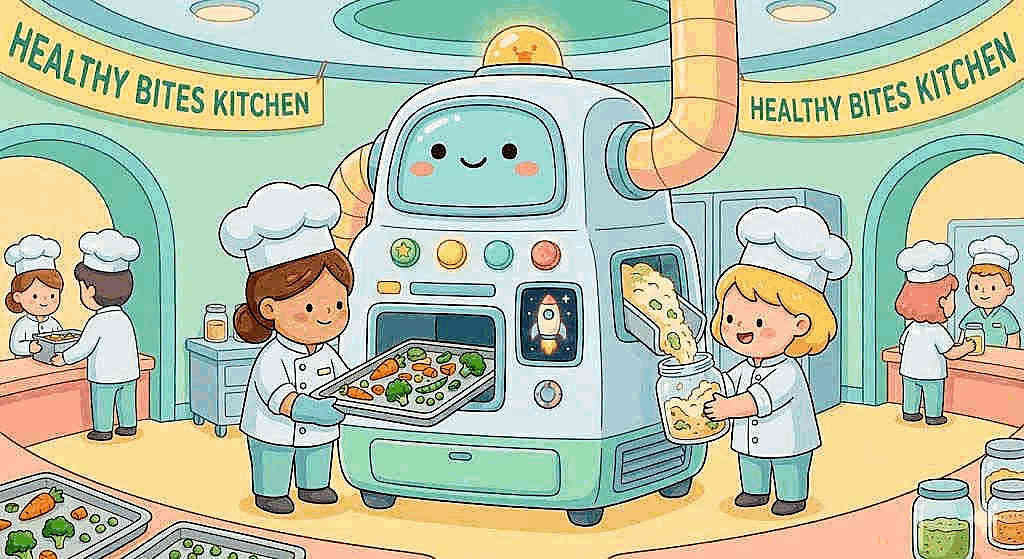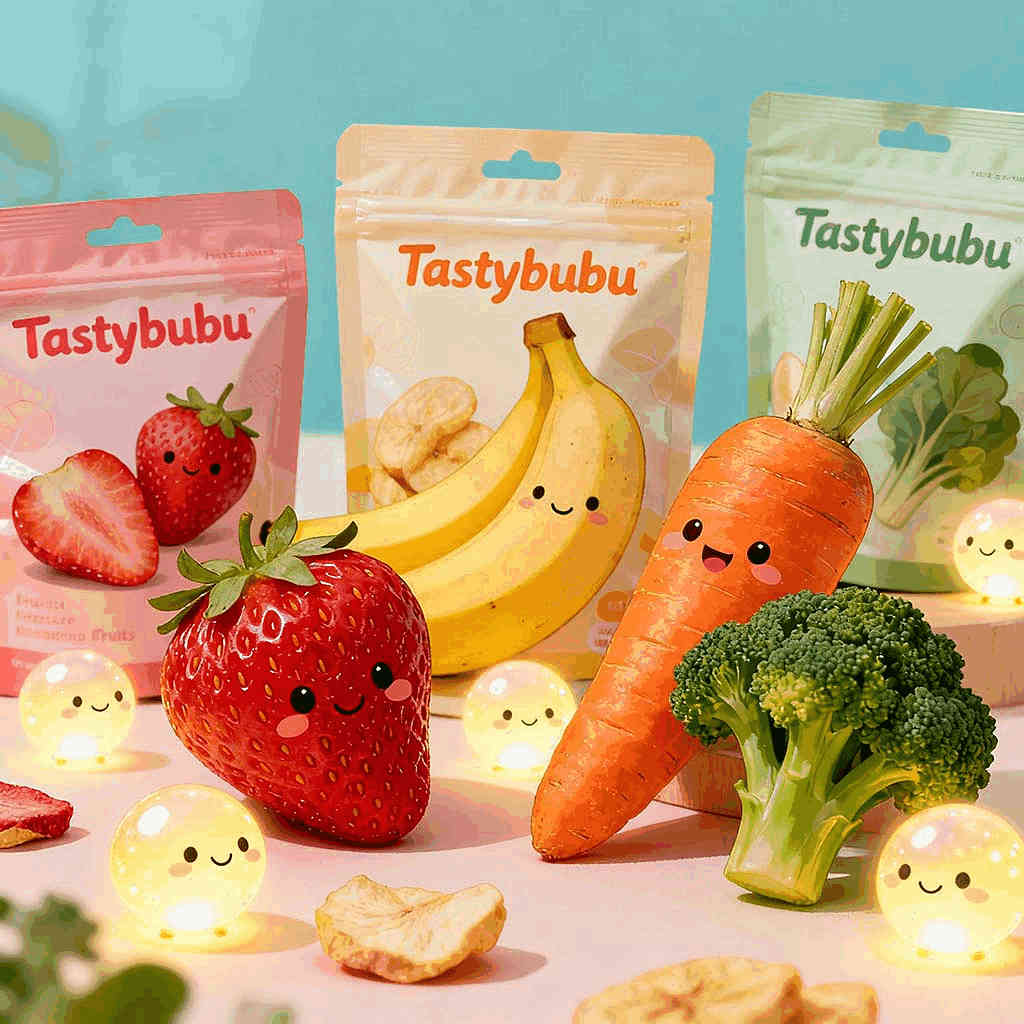
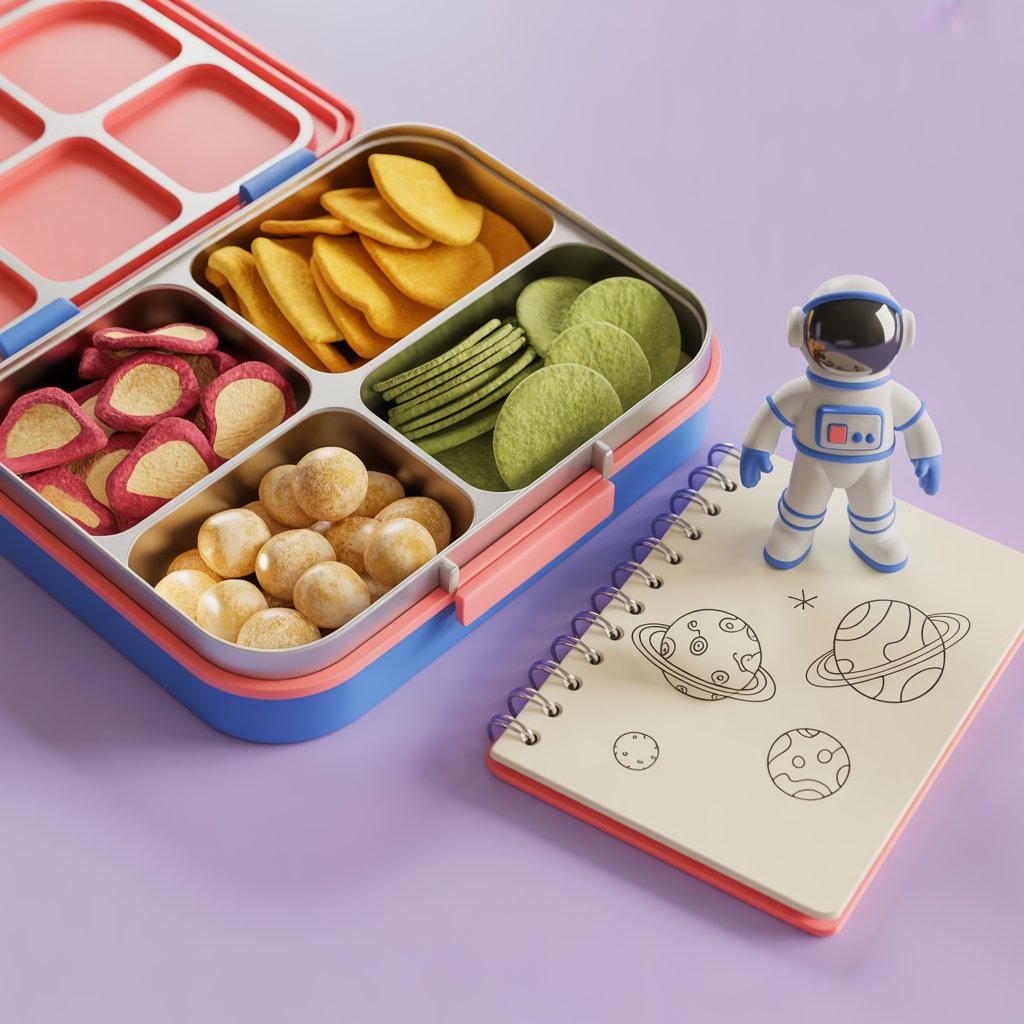
Space tech everyday snacks are emerging from aerospace labs to become lighter, crunchier treats in our daily lives. Space and aerospace programs are indeed using freeze-dried, high-tech foods to tackle taste, texture, safety, and “menu fatigue” in long missions, and several of the underlying innovations—texturized proteins, hybrid freeze‑drying, and functional snacks—are already crossing over into mainstream plant‑based, kid‑friendly products on Earth. Evidence from space nutrition reviews, hybrid drying research, and dried‑snack innovation papers supports the idea that these technologies can make future snacks more flavorful, protein‑dense, and environmentally efficient, although real‑world impact will depend on cost, regulation, and consumer acceptance.
Space food, freeze‑drying and menu fatigue
Space food systems rely heavily on freeze‑dried and other shelf‑stable items because they must be compact, microbiologically safe, and stable for long periods, especially for missions beyond low Earth orbit. Reviews of long‑term space nutrition note that limited variety and palatability can trigger “menu fatigue,” where astronauts lose appetite and may under‑eat despite foods meeting technical nutrition and safety criteria.
To address this, current space menus mix freeze‑dried meals, snacks, thermostabilized dishes, and some fresh produce on the ISS, and new work on flavor, texture, and cultural variety is seen as essential for future lunar and Mars missions. Modern space food R&D focuses not only on calories and shelf life but also on psychological wellbeing, including comfort foods and more appealing textures, which mirrors trends in premium snacks on Earth.
Texturized proteins and novel space proteins
Recent concept papers on “functional foods for astronauts” highlight the need for high‑quality protein sources that support muscle, bone, and immune function under space conditions, and they explicitly discuss plant proteins and other alternatives as candidates. Parallel industrial projects are developing space‑oriented snack cubes and bites that combine freeze‑dried fruits and vegetables with added proteins such as pea protein, lactoferrin analogues, and unicellular or microbial proteins grown on CO₂ and hydrogen.
These approaches resemble terrestrial work on texturized plant proteins and fortified dried snacks, where structure and composition are engineered to deliver specific textures (chewy, crunchy) and higher protein density while still using fruit or vegetable bases. Such technologies could readily be adapted into retail “space‑inspired” snacks for children and adults, for example fruit‑plus‑protein cubes or bars that mimic astronaut foods but are optimized for everyday taste and nutrition.
Hybrid and “green” freeze‑drying
Conventional freeze‑drying gives excellent quality but is energy‑intensive, which has motivated hybrid methods that combine freeze‑drying with microwaves, infrared, ultrasound, or atmospheric techniques to reduce time and energy use. Reviews of microwave and infrared hybrid freeze‑drying show that these methods can cut drying time by more than half and significantly reduce specific energy consumption while maintaining or improving color, rehydration, and nutritional quality.
For space and aerospace applications, faster, more efficient freeze‑drying supports both mission logistics and potential in‑situ production (for example, drying algae or microbial protein grown on spacecraft), which in turn could spill over into more cost‑competitive, lower‑footprint commercial freeze‑dried snacks. If scaled with low‑carbon energy, these technologies support the narrative that next‑generation freeze‑drying can be both high‑quality and more sustainable than traditional systems.
From space labs to everyday snacks
NASA’s historical and ongoing reliance on freeze‑dried foods helped normalize the technology and inspired outdoor, emergency, and novelty “astronaut” snacks on Earth. Contemporary overviews of plant‑based freeze‑dried foods emphasize that vacuum freeze‑drying preserves structure, flavor, and nutrients better than many high‑temperature methods, making it attractive for premium fruits, vegetables, and plant‑based ingredients.
Research on dried fruit snacks and emerging snack technologies shows strong interest in fortification with vitamins, probiotics, and functional compounds, as well as in child‑friendly portioned formats that align well with the kind of bite‑sized, shelf‑stable foods being trialed for space missions. Together, these trends suggest a credible pathway where aerospace‑driven advances in texture design, protein integration, and energy‑efficient drying directly inform the next generation of plant‑based, high‑protein, kid‑oriented freeze‑dried snacks.
Sources
- Long‑Term Space Nutrition: A Scoping Review – Tang et al. https://pmc.ncbi.nlm.nih.gov/articles/PMC8747021/
- Space Food: Feeding Astronauts Beyond Earth – Kachhot https://researchtrend.net/bfij/pdf/Space-Food-Feeding-Astronauts-Beyond-Earth-Sima-Kachhot-29.pdf
- Current Processing and Packing Technology for Space Foods: A Review https://pubmed.ncbi.nlm.nih.gov/31830802/
- Space nutrition for long‑duration missions: innovations and challenges https://www.emerald.com/nfs/article/55/6/1048/1298561/Space-nutrition-for-long-duration-missions
- Functional foods for astronauts: Enhancing health and performance in space https://www.sciencedirect.com/science/article/pii/S2950616625000038
- Freeze‑Drying of Plant‑Based Foods – Review https://pmc.ncbi.nlm.nih.gov/articles/PMC7022747/
- Recent Developments in the Hybridization of the Freeze‑Drying of Foods https://pmc.ncbi.nlm.nih.gov/articles/PMC10528370/
- Application of infrared radiation in the drying of food products https://www.sciencedirect.com/science/article/pii/S0924224421001461
- Advancements in atmospheric freeze‑drying https://www.sciencedirect.com/science/article/pii/S026087742400339X
- Next‑Generation Food Drying: Specialized and Smart Technologies https://ift.onlinelibrary.wiley.com/doi/10.1111/1541-4337.70269
- Emerging Technologies in Dried Fruit Snacks: Nutritional and Technological Aspects https://ift.onlinelibrary.wiley.com/doi/10.1111/1541-4337.70225
- Panevežys company develops space‑ready snacks – Supergarden https://www.supergarden.lt/en/blog/cold-beet-soup-in-space-panevezys-company
- Out of this world innovations offer hope for future food – Fi Global Insights https://insights.figlobal.com/innovation-technology/out-of-this-world-innovations-offer-hope-for-future-food
- Tackling taste, texture & safety challenges in space food – ESA‑related feature https://www.foodingredientsfirst.com/news/space-food-science-esa.html
- Freeze‑Dried Foods Nourish Adventurers and the Imagination – NASA Spinoff https://spinoff.nasa.gov/Spinoff2020/cg_2.html
- Freeze‑Dried Cuisine in Space: Shelf‑Stable Flavor for Long Missions https://www.airwoods.com/news/freeze-dried-cuisine-in-space-shelf-stable-flavor-for-long-missions/
- The History of Freeze Drying: From Space Missions to Everyday Use https://chinafreezedried.com/the-history-of-freeze-drying-from-space-missions-to-everyday-use
- The Freeze‑Dried Revolution in Food Preservation https://shuttertothestars.com/the-freeze-dried-revolution-in-food-preservation/
- Tastybubu News and Learning Articles