
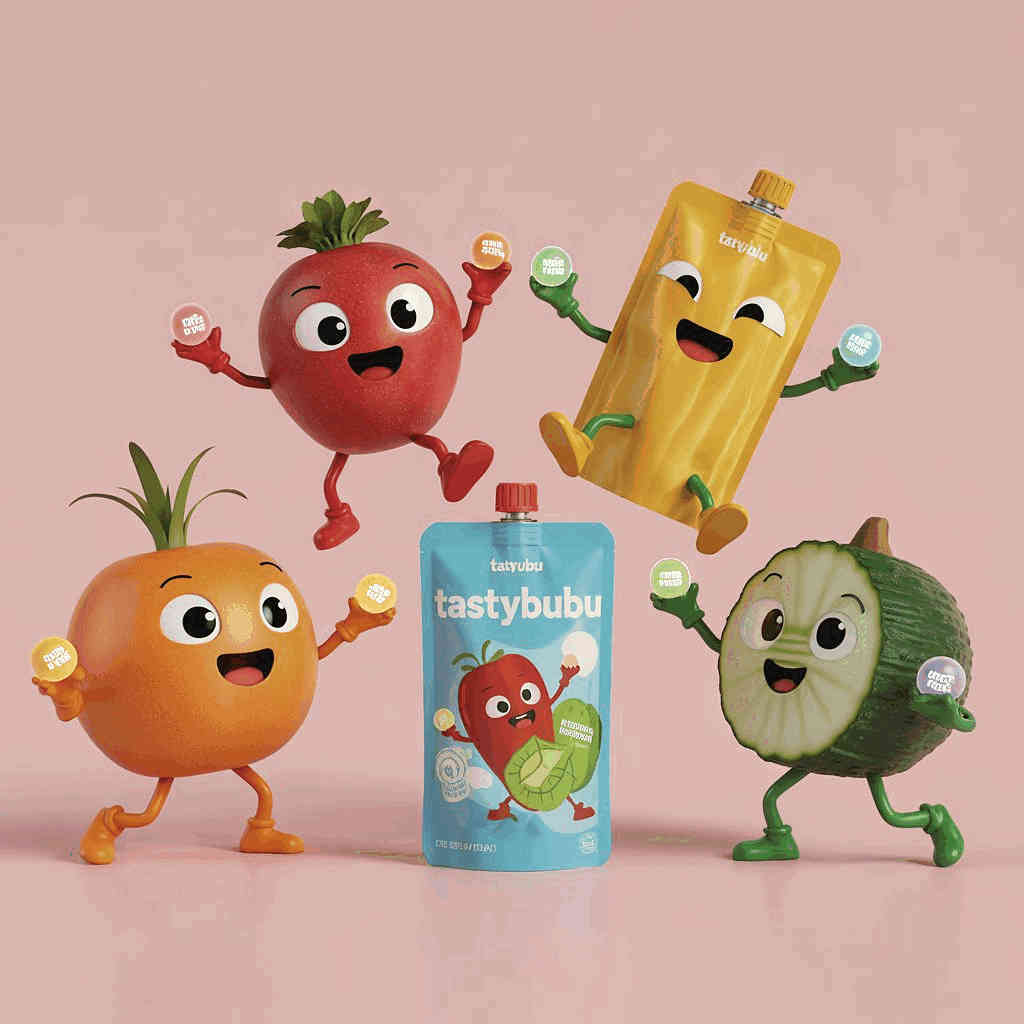
Emerging human and lab studies suggest that freeze‑dried superfood ingredients like kale and peas can nudge inflammation, oxidative stress, and metabolic markers in different ways, while freeze‑drying region‑specific crops such as Barhi dates can preserve their sensory qualities and nutrients and turn them into export‑ready, culturally rooted health foods. These patterns support a precision nutrition story for snack lines and a “local crop to global shelf” angle for community‑based brands such as Tatsybubu.
SUPERFOOD PRECISION NUTRITION WITH KALE AND PEAS
A 2024 crossover trial in Saudi women with obesity used freeze‑dried superfood crops like kale and peas and found that both ingredients improved overall anthropometric and metabolic parameters over time, but peas produced stronger short‑term improvements in glycemic markers such as HbA1c and C‑peptide, suggesting different metabolic “signatures” for each ingredient. The same study indicated that kale performed better on some body‑composition measures like waist‑to‑hip ratio, echoing preclinical work where kale reduced high‑fat‑diet‑induced inflammation and shifted gut microbiota toward a less inflammatory profile.
Beyond single trials, broader polyphenol research shows that higher intakes of plant polyphenols, such as those found in kale and pulses, are linked to modest improvements in body weight, blood pressure, lipid profiles, and other metabolic‑syndrome components, supporting the idea of targeting specific bioactive profiles in precision snack concepts. Peas and other pulses are also recognized for their fermentable fibers and phenolics, which can support cardiovascular and gastrointestinal health, giving product developers room to differentiate SKUs around blood sugar, heart health, or gut support rather than a generic “superfood mix.”
REGION-SPECIFIC SUPERFOOD CROPS AND BARHI DATES
Barhi dates at the crisp, yellow Khalal stage are highly perishable, causing major post‑harvest losses if they are not processed quickly, but recent work shows that freeze‑drying—especially when combined with mild antioxidant dips—can dramatically extend shelf life while preserving bioactive compounds and antioxidant activity. One 2025 study reported that freeze‑dried Barhi dates retained natural sweetness, fiber, and a low glycemic index, with about 20 g of freeze‑dried product nutritionally equivalent to roughly 60 g of fresh fruit, making them attractive as compact, nutrient‑dense superfood snacks.
Research on cold‑stored and coated Barhi dates underlines how carefully managed processing can maintain sensory attributes like texture, color, taste, and overall acceptability over storage, which supports premium, export‑oriented products that still taste “like home.” For community‑based brands in producing regions, this combination of extended shelf life, cultural familiarity, and nutritional density creates a foundation for storylines around food sovereignty, local farmer income, and climate‑resilient value chains.
How this enables Tatsybubu-style concepts
Taken together, the kale–pea crossover trial and broader pulse and polyphenol literature provide a scientific basis for segmenting freeze‑dried superfood snack lines by targeted benefits (for example, a pea‑forward blend emphasizing glycemic control versus a kale‑rich blend highlighting inflammation and body‑composition support). At the same time, the Barhi date studies show that freeze‑drying can convert fragile, seasonal local fruits into shelf‑stable, nutrient‑dense products that retain sensory appeal, aligning with a brand story that champions regional crops while reaching regional and global markets.
sources
- Frontiers in Nutrition (2024) – “Is freeze-dried superfood kale supplementation healthier than peas in reducing metabolic risk in obese Saudi women?” https://www.frontiersin.org/articles/10.3389/fnut.2024.1370677
- Nutrients (2021) – “Kale Attenuates Inflammation and Modulates Gut Microbial Composition in a High-Fat Diet Model” https://www.ncbi.nlm.nih.gov/pmc/articles/PMC7911404/
- Frontiers in Sustainable Food Systems (2025) – “Evaluating the nutritional, physicochemical, and quality characteristics of freeze-dried Barhi dates” https://www.frontiersin.org/articles/10.3389/fsufs.2025.1673255
- Foods / MDPI (2023) – “Quality Attributes of Refrigerated Barhi Dates Coated with Edible Coatings” https://www.ncbi.nlm.nih.gov/pmc/articles/PMC9180732/
- Oxidative Medicine and Cellular Longevity (Wiley/Hindawi) – “Effects of Polyphenol Intake on Metabolic Syndrome” https://onlinelibrary.wiley.com/doi/10.1155/2017/5812401
- Frontiers in Nutrition (2023) – “Enhanced accumulation of phenolics in pea (Pisum sativum L.) and their implications for human health” https://www.frontiersin.org/articles/10.3389/fnut.2023.1083253
- Tastybubu News and Learning Articles